

AI and Cultural Production Workshop
Conference
04 Jun 2026
1:15 pm - 5:15pm
Screening Room 1 (M6050), L6, Run Run Run Shaw Creative Media Centre, City University of Hong Kong
Free admission
|
|
The AI and Cultural Production Workshop is a two-part workshop series exploring the profound, transformative, and often contentious relationships between artificial intelligence and cultural production. Over recent years, AI has evolved far beyond its role as a mere technical tool, becoming a powerful and pervasive force shaping contemporary cultural practices. This shift challenges conventional notions of authorship, creativity, agency, and responsibility across a broad spectrum of artistic fields. These include AI-enabled literature, music, visual arts, narrative construction, translation, and collaborative creative processes, where human-machine interaction redefines the boundaries of artistic expression.
The workshop series is designed as an interdisciplinary convergence, fostering a dynamic platform where scholars, artists, technologists, and cultural practitioners from diverse backgrounds can engage in critical dialogue. It offers a unique opportunity to explore the implications, opportunities, and challenges posed by AI in cultural contexts, encouraging cross-pollination of ideas and perspectives between the academic and creative communities.
In this workshop, we are proud to feature three distinguished speakers, representing a spectrum of expertise—from leading scholars who critically analyze AI’s impact on culture to visionary artists who harness AI as a creative partner. Their presentations will offer diverse insights and inspire thoughtful discussions on how AI continues to reshape the landscape of cultural production in innovative and sometimes unexpected ways.
Talk #1
1:20 pm - 2:20 pm
Computational Models of Cinematic Time in the Age of AI Video
For over a century, cinema taught us how to watch, enjoy and remember through moving images. Its editing grammars, rhythms of duration, conventions for assembling fragments into imagined wholes — these became the shared infrastructure of moving image culture, shaping how millions of people experience time, causality, and history through screens. Today, AI video generation systems predict motion rather than record it, synthesising images that look like recordings but are more like intersubjective paintings. This kind of moving images remediate some of the conventions of cinema, but also bring with them new representational and narrative affordances .
Drawing on nearly a decade of the author's research — from his collaboration with the BBC to produce the "first AI television programme" to his most recent projects with AI in film archives ― this lecture will focus on how cinematic time can be reconceptualised not as a timeline but as a topology: a high-dimensional network of temporal parts, woven through film collections over decades, that gives moving images their power to structure shared experience. This will include early experiments in modelling this topology computationally and reflect on what such models might reveal about the transition from recorded to predicted moving images — a shift Daniel calls Ectocinema. For practitioners working at the edges of AI-generated media, this research offers a different kind of question: not only what AI can produce, but what it is replacing, and whether that matters.
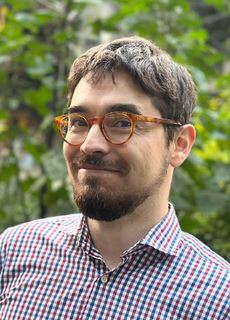
Prof. Daniel Chávez Heras
Associate Professor in Digital Culture and Creative Computing
Department of Digital Humanities
King's College London
Daniel Chávez Heras is Associate Professor in Digital Culture and Creative Computing in the Department of Digital Humanities at King's College London. He specialises in the computational production and analysis of screen culture. His research combines critical frameworks from film, television, and media studies with technical practice in creative and scientific computing, including applied machine learning and AI technologies.
Daniel works with cultural institutions including projects with the British Film Institute, the British Council, and the BBC. He is a fellow of the Institute for Artificial Intelligence and the Digital Futures Institute at King's, a founding member of the Creative AI Lab and leads the Computational Creativity and Synthetic Media strand in Computational Humanities Research Group. He is the author of Cinema and Machine Vision: Artificial Intelligence, Aesthetics and Spectatorship (Edinburgh University Press, 2024).
Moderators:
- Prof. Lei Qinyuan
- Choi Sin Yi, Emilie (PhD candidate, School of Creative Media, City University of Hong Kong)
Talk #2
2:20pm - 3:20 pm
Cinema in the Kino-Field: Twenty-Fifth Hour as Practice-Led Research in AI–Virtual Production
This lecture presents Twenty-Fifth Hour as a practice-led research case for examining how artificial intelligence and virtual production are transforming cinema as an artistic, technical, and cultural form. Rather than approaching AI as a tool for generating images or virtual production as a workflow for efficiency, the talk asks a broader question: what happens to authorship, labour, perception, and cinematic realism when the image emerges from a field of relations among human bodies, AI models, Unreal environments, LED volumes, physical sets, sound design, and imagined audiences?
Drawing on the production of Twenty-Fifth Hour, a hybrid AI–ICVFX short film about a world in which sound is disappearing, I propose the concept of the Kino-Field: a contemporary condition in which cinema is no longer organized around the camera alone, but through a distributed ecology of computational systems, production infrastructures, human judgment, and sensory experience. Through concrete production examples—AI concept design, virtual art department collaboration, LED-volume shooting, AI-generated effects, editorial reconstruction, physical set anchoring, and sonic world-building—the lecture explores how creative authority is redistributed across directors, cinematographers, editors, sound designers, prompt operators, VP supervisors, datasets, tools, and institutional expectations.
The central argument is that the challenge of AI–VP filmmaking is not simply to generate striking images, but to make synthetic images inhabitable. Sound, performance, material objects, and editorial rhythm become crucial anchors that give AI-generated worlds weight, distance, atmosphere, and emotional credibility. At the same time, the process raises urgent critical questions. Who authors a cinematic image made through multiple human and machinic agencies? Which forms of labour become newly visible or newly hidden? How does the imagined audience shape aesthetic risk? And how can practice-led research help build AI-heavy workflows that preserve ambiguity, slowness, empathy, and critical artistic judgment?
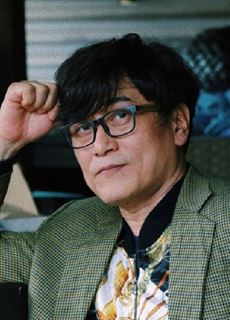
Prof. Chul Heo
Professor in School of Culture and Creativity
Beijing Normal–Hong Kong Baptist University
Chul Heo is a filmmaker and media scholar whose work bridges film practice, media aesthetics, production studies, sound theory, and emerging screen technologies. He is Professor in the School of Culture and Creativity at Beijing Normal–Hong Kong Baptist University, and previously taught at Nanyang Technological University, Korea University, and San Francisco State University. He holds a PhD from the University of Iowa and an MFA from Brooklyn College, City University of New York. His feature film The Return won the Golden Zenith Award for First Fiction Feature in the World Competition at the Montreal World Film Festival. His recent practice-led research investigates AI-assisted filmmaking, virtual production, ICVFX, cinematic sound, and transnational production cultures. His current short film, Twenty-Fifth Hour, combines live action, AI-generated imagery, LED-volume production, and immersive sound design to explore empathy, technological mediation, and the disappearing textures of human experience.
Moderators:
- Prof. Ip Yuk Yiu
- Deng Xinyue (PhD candidate, School of Creative Media, City University of Hong Kong)
Talk #3
4:00 pm - 5:00 pm
Beyond the Prompt: Ubiquitous Computing and AI Art
Generative AI offers unprecedented opportunities to create dynamic, context-aware digital art experiences. By leveraging ubiquitous computing principles, we can expand generative AI beyond the screen. The entire living, physical space itself becomes the prompt, moving beyond simple text or image input. This talk explores how AI can function as both a creative collaborator and an interpretative engine through several artistic installations and academic systems, spanning three key aspects of ubiquitous computing: Sensing, Processing, and Presentation.
Sensing acts as the interface between AI and the physical world. We will examine installations where generative engines leverage ambient sensors to (re)interpret physical data. Yet, combining the probabilistic nature of generative AI with noisy sensor data presents significant challenges in creating consistent experiences and preserving the artist’s vision. Processing addresses this, providing frameworks, techniques, and tools for artists to manage complex data flows while balancing authorial intent with AI’s non-deterministic properties. Finally, Presentation introduces complexities when the data, whether input or output, is ambiguous. We will illustrate this through ongoing works that deploy strategies for representing ambiguous data and AI outputs, turning uncertainty into an integral part of the artistic experience.
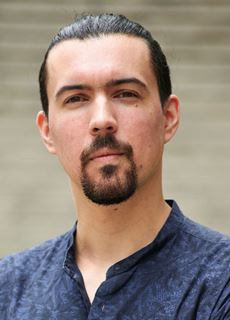
Prof. Tristan Braud
Assistant Professor in Division of Integrative Systems and Design
Hong Kong University of Science and Technology
Dr. Tristan Braud is an Assistant Professor in the Division of Integrative Systems and Design at the Hong Kong University of Science and Technology (HKUST), where he leads the Extended Reality and Immersive Media Lab (XRIM Lab). His research explores the intersection between pervasive computing and human-centred systems design, leveraging extended reality as its primary medium. As part of his research, Dr. Braud actively explores the intersection between technology and artistic expression through several projects that integrate sensing, AI, and extended reality into installations and performances.
Moderators:
- Prof. Tobias Klein
- Daniel Stempfer (PhD student, School of Creative Media, City University of Hong Kong)
Registration
Registration is open to all. Please register here by 3 June 2026 (Wednesday), 17:00.